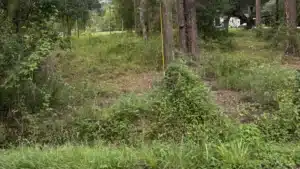
Clearing land for construction means removing trees, brush, stumps, and debris, then grading the site so it drains well and can hold a foundation. In Louisiana, the main steps are a survey, permits, utility marking, vegetation removal, stump and root removal, debris hauling, and final grading. Here’s how each step works on real Gulf South lots.
If your property is thick with brush or old growth, professional land clearing services save weeks and protect your build from costly surprises. Wet clay soil, buried stumps, and high water tables make Louisiana lots trickier than most. Skipping steps here shows up later as cracked slabs and standing water.
The 7 Steps to Clear Land for Construction
- Survey the property first so you know the boundaries, slopes, and soil type before any equipment rolls in.
- Pull the permits your parish requires, including any land-disturbance or stormwater permits.
- Mark and protect underground utilities by calling 811 at least two full business days ahead.
- Remove trees, brush, and overgrowth using the right machine for the density.
- Grind out stumps and roots below grade so buried wood can’t rot or heave later.
- Haul off, chip, or recycle the debris based on volume and local rules.
- Rough grade the lot so water drains away from the future foundation.
Step 1: Survey the Land and Test the Soil
Start with a boundary survey. It tells you where you can legally clear and where setbacks, easements, or wetlands begin. Walk the lot and note low spots, slopes, and where water pools after rain. Those clues shape your drainage plan later.
Soil matters just as much. Much of South Louisiana sits on heavy clay with a high water table, which affects how deep you can dig and how a slab will settle. You can pull free soil data for your parcel from the USDA Web Soil Survey before you hire anyone.
Did You Know? Louisiana’s expansive clay swells when wet and shrinks when dry. That movement is a leading cause of foundation cracks, which is why good grading and drainage start on day one.
Step 2: Get the Right Permits in Louisiana
Yes, you often need a permit to clear land for construction here. Rules change by parish, so check with Orleans, Jefferson, St. Tammany, or your local office before work begins. Many parishes have tree removal ordinances and extra rules near wetlands or drainage canals.
If your project disturbs one acre or more, you’ll likely need a stormwater permit. You can review the requirements through the Louisiana Department of Environmental Quality. Getting this wrong can stall your build and bring fines.
Pro Tip: Apply for permits early. Approvals can take days to weeks, and clearing before you’re approved can force you to stop work or restore the site.
Step 3: Mark Utilities Before You Dig
Buried gas, water, power, and fiber lines run through more lots than people expect. Before any blade touches the ground, call 811 at least two full business days ahead to have public lines marked for free. In Louisiana this is the law, not a suggestion. As of August 2025, at least one person on the job site also has to finish Louisiana 811’s free online safe-digging training each year.
Wait for every line to be marked and flag them clearly so your crew works around them. Hitting a gas or power line is dangerous and expensive, and you may be held liable for repairs.
Did You Know? Damaging an unmarked-but-locatable utility can leave you paying for repairs, outages, and penalties. One 811 request removes almost all of that risk.
Step 4 & 5: Clear the Vegetation, Then Remove the Stumps
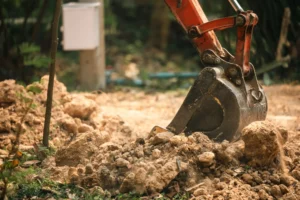
Now the real clearing begins. The equipment depends on how dense the growth is. Light brush and saplings clear fast with a skid steer and forestry mulcher. Heavier tree cover calls for an excavator or dozer to push, pull, and pile larger trunks.
Cutting trees at ground level is only half the job. Stumps and root balls stay in the soil, and this is where many DIY jobs go wrong. On our Louisiana crews, we grind stumps well below grade because buried wood in wet clay tends to rot, hollow out, and then heave upward as the soil shifts. That movement is one of the most common reasons a “cleared” lot fails a later inspection or cracks a new slab. Pulling and grinding roots now saves a teardown later.
Pro Tip: Ask any contractor exactly how they handle stumps and roots. “We cut it flush” is not the same as “we grind and remove the root system.” For construction, you want the roots gone.
Step 6 & 7: Haul the Debris and Grade for Drainage
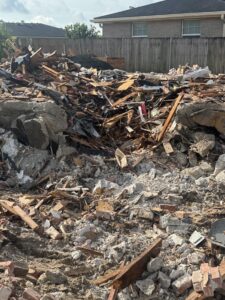
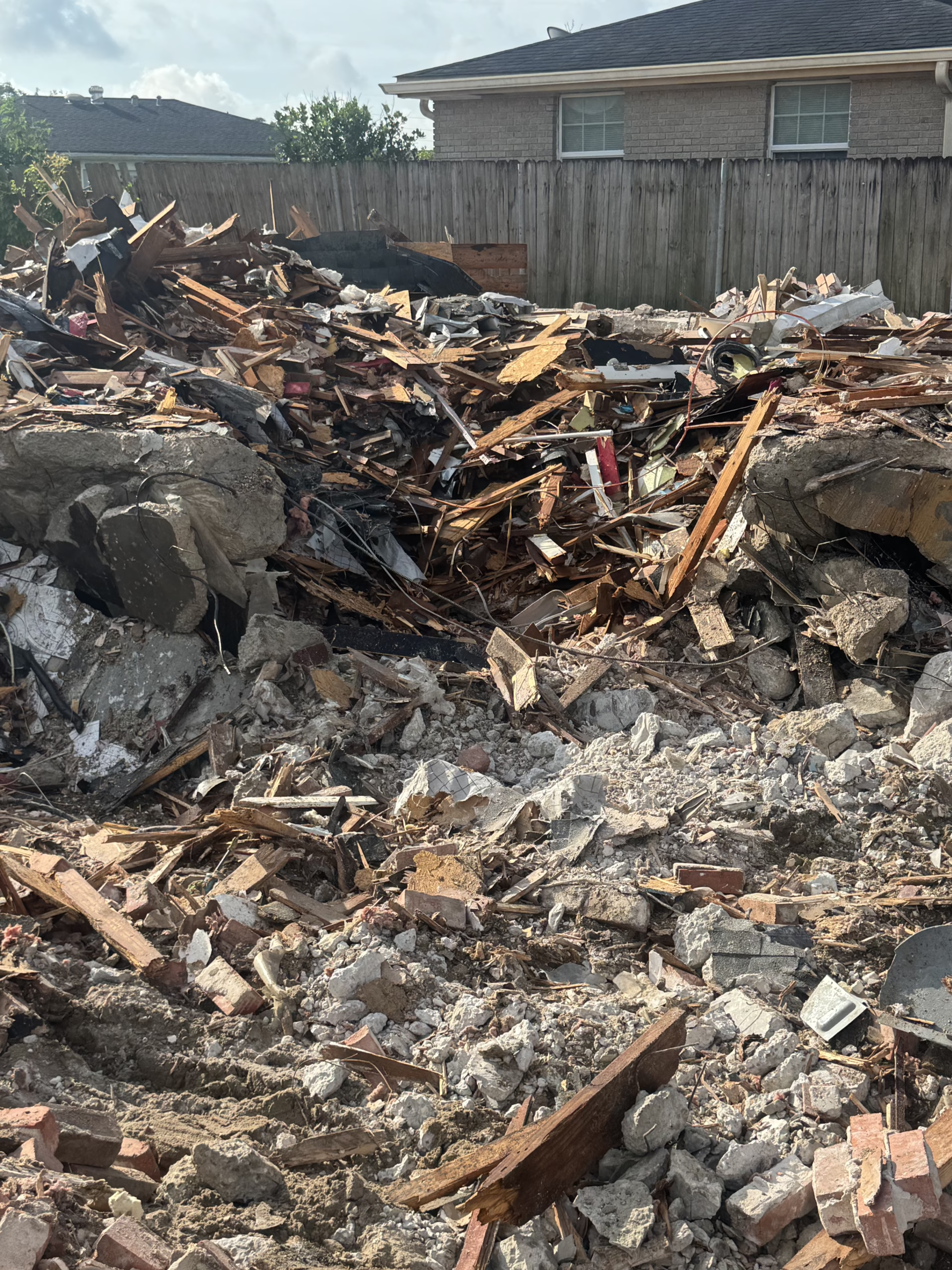
Clearing creates a lot of material: logs, brush, root balls, and sometimes old concrete. Your best options are hauling it off, chipping it into mulch, or recycling clean concrete into usable fill. Louisiana has strict open-burning rules. Burning construction debris is against the law, and in the New Orleans area burning cleared brush usually isn’t allowed either, so plan your disposal before the piles stack up.
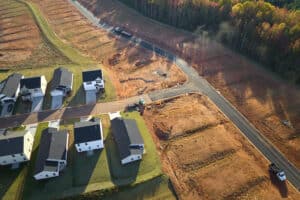
Grading is the finish that makes the lot buildable. Rough grading levels the site and slopes it so water runs away from where your foundation will sit. In flood-prone areas, this often ties into deeper excavation and drainage features like swales or fill pads. Proper site work and grading is what keeps water out of your future home.
What Clearing Costs and How Long It Takes
Price depends on lot size, tree density, terrain, and how much debris leaves the site. A small residential lot may take a day or two, while wooded acreage can run a week or more. For real local numbers, see our breakdown of what land clearing costs in the New Orleans area.
Frequently Asked Questions
How long does it take to clear land for construction? A small residential lot often takes one to three days. Larger or heavily wooded parcels can take a week or more, depending on tree density, terrain, and debris removal. Wet weather can add time since Louisiana clay gets soft fast.
Do I need a permit to clear land in Louisiana? Often yes, and the rules vary by parish. Many areas require permits for tree removal, land disturbance, or stormwater, especially on sites of an acre or more or near wetlands. Always check with your local parish office before you start.
What is the difference between land clearing and grading? Land clearing removes trees, brush, stumps, and debris from the site. Grading reshapes and levels the cleared ground so it drains correctly and can support a foundation. Most construction projects need both, in that order.
Can I clear land for construction myself? You can clear light brush yourself, but construction-grade clearing usually needs heavy equipment and stump removal below grade. DIY work also skips permits, utility marking, and drainage planning, which can cause failed inspections or foundation problems later. For a buildable site, hiring a licensed contractor is safer and often faster.
The Bottom Line
Clearing land for construction is a sequence, not a single task. Survey and test the soil, pull your permits, mark utilities, clear the growth, remove stumps and roots, haul the debris, and grade for drainage. Handle each step in order and you hand your builder a clean, stable, buildable lot with no hidden problems waiting under the surface.
Ready to break ground? Contact Barrel Industries for a free, no-obligation estimate on your land clearing project. We know Louisiana soil, parish rules, and what it takes to prep a site the right way.